


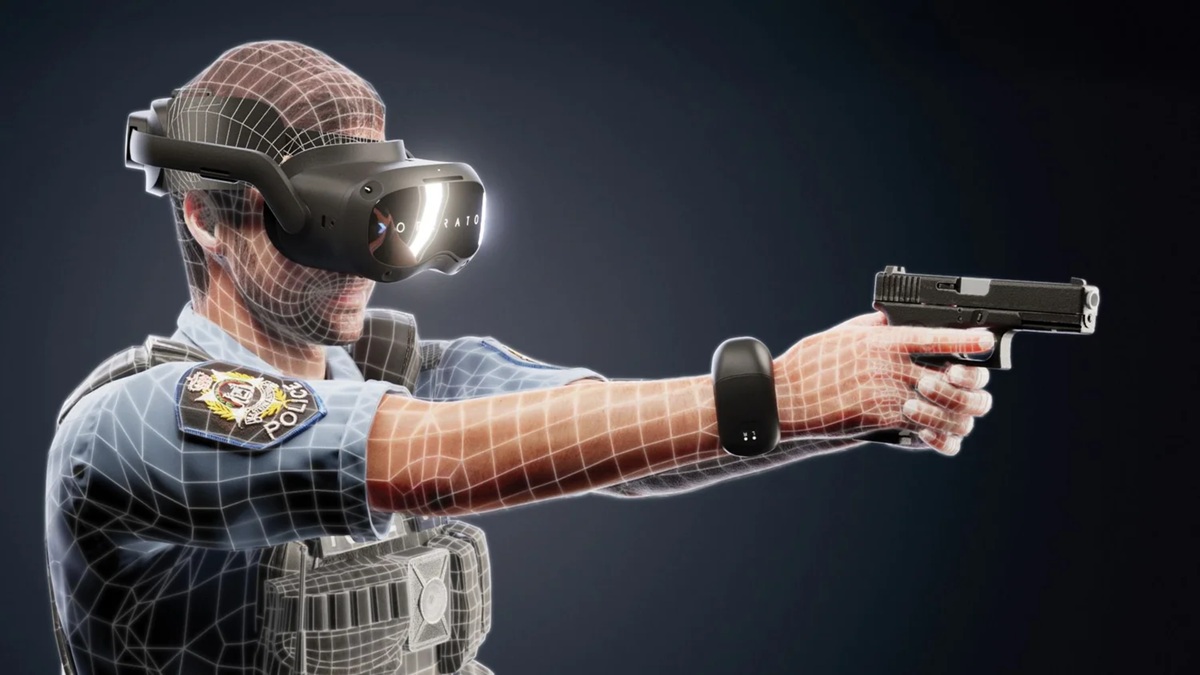
Modern policing demands more than physical readiness and procedural knowledge. Officers are expected to make rapid, high-stakes decisions in unpredictable environments, often under intense pressure. As these expectations grow, so too does the need for more effective training methods. VR training for law enforcement has emerged as a powerful tool, offering immersive, realistic scenarios that help officers develop the skills and judgement required in the field.
At its core, VR training places officers inside simulated environments that replicate real-world situations. Using headsets and interactive controls, trainees can navigate incidents such as traffic stops, domestic disputes, or active threat scenarios. Unlike traditional classroom learning, VR allows officers to experience these situations first-hand, making decisions in real time and observing the consequences of their actions. This experiential approach enhances understanding and retention, bridging the gap between theory and practice.
One of the most significant advantages of VR training is the ability to practise safely. Law enforcement scenarios can involve considerable risk, making it difficult to replicate them fully in real life. VR eliminates this barrier by creating a controlled environment where officers can make mistakes without real-world consequences. This allows for repeated practice, helping trainees build confidence and refine their responses over time.
Realism plays a crucial role in the effectiveness of VR training. Advances in technology have made it possible to create highly detailed environments, complete with realistic visuals, sound, and interactive elements. These simulations can mimic the complexity of real incidents, including unpredictable behaviour from virtual individuals. By experiencing these dynamic scenarios, officers develop situational awareness and learn to adapt to changing circumstances.
Another key benefit is the ability to focus on decision-making and judgement. In many situations, the outcome depends not just on what an officer does, but how and when they do it. VR training allows for the exploration of different approaches, showing how various decisions can lead to different results. This helps officers understand the impact of their actions and encourages more thoughtful, measured responses in real-world situations.
De-escalation training is an area where VR has shown particular promise. By simulating tense interactions, officers can practise communication techniques aimed at reducing conflict. These scenarios often require careful assessment of tone, body language, and timing, all of which can be refined through repeated exposure. The ability to rehearse these skills in a realistic setting supports more effective and safer outcomes in the field.
VR training also offers flexibility and scalability. Scenarios can be customised to reflect specific local challenges, policies, or community contexts. This ensures that training remains relevant and tailored to the needs of each organisation. Additionally, VR systems can be deployed in various locations, making it easier for departments to provide consistent training without the need for large physical setups.
Data and feedback are integral to the process. VR platforms can track performance metrics such as reaction times, decision accuracy, and adherence to protocols. This information provides valuable insights for both trainees and instructors, highlighting areas for improvement and reinforcing effective behaviours. Immediate feedback allows officers to learn from each session, accelerating their development.
Collaboration is another area where VR training can add value. Some systems allow multiple participants to engage in the same scenario, enabling teams to practise coordination and communication. This is particularly important in law enforcement, where teamwork can significantly influence the outcome of an incident. By training together in a simulated environment, officers can improve how they operate as a unit.
While VR training offers many advantages, it is most effective when used alongside traditional methods. Physical training, field experience, and mentorship remain essential components of law enforcement preparation. VR serves as a complementary tool, enhancing these methods by providing additional opportunities for practice and reflection.
Looking ahead, VR training is likely to become even more sophisticated. Advances in artificial intelligence could enable simulations to respond more dynamically to user behaviour, creating increasingly realistic and personalised experiences. This evolution will further strengthen the role of VR in preparing officers for the complexities of modern policing.
As law enforcement continues to adapt to new challenges, the importance of effective training cannot be overstated. VR training provides a practical and innovative way to build skills, improve decision-making, and enhance overall readiness. By immersing officers in realistic scenarios, it helps ensure they are better prepared to respond confidently and responsibly when it matters most.
