


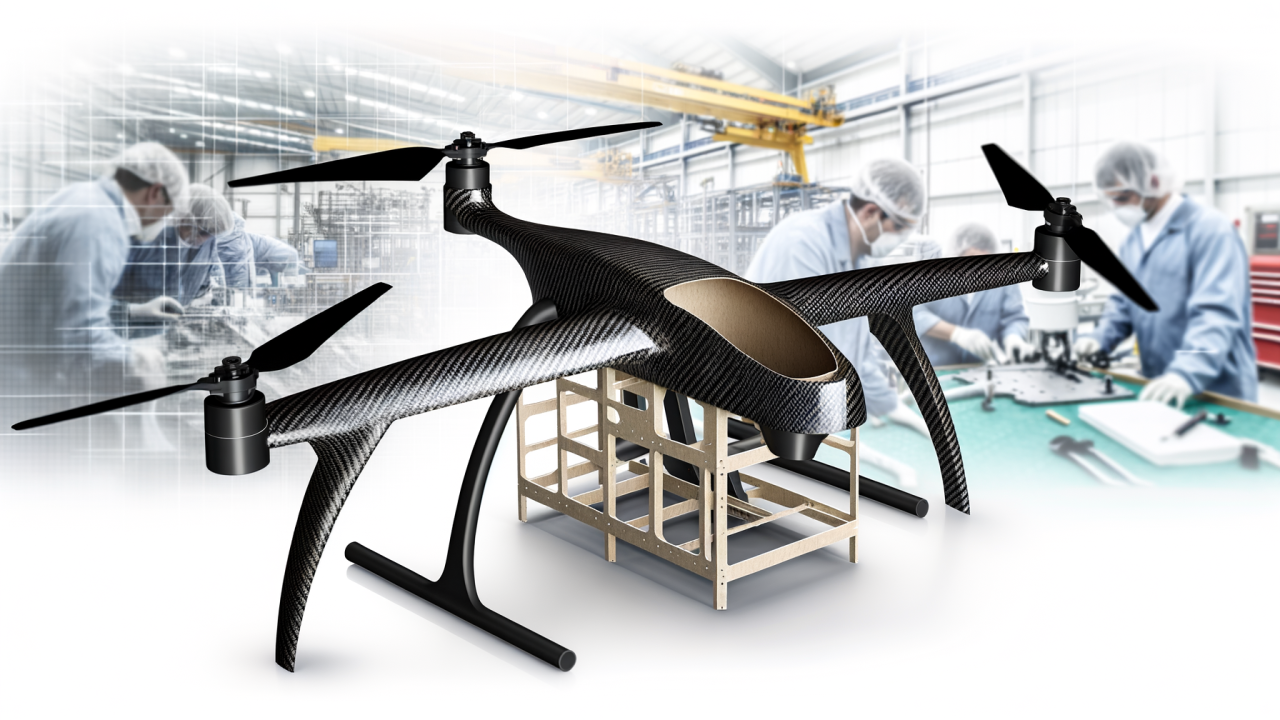
The rapid growth of the drone industry has transformed sectors ranging from agriculture and infrastructure inspection to defense, logistics, and aerial photography. Behind the impressive capabilities of today’s unmanned aerial vehicles lies a critical technological advancement: UAV Composite Materials. These advanced materials provide the strength, durability, and lightweight characteristics required for high-performance drone applications.
As manufacturers continue to push the boundaries of endurance, payload capacity, and flight efficiency, composite materials have become an essential component in the design and production of modern UAVs. Their unique properties enable engineers to create aircraft that are lighter, stronger, and more reliable than those built with traditional materials.
Why Material Selection Matters in UAV Manufacturing
Every gram matters when designing an unmanned aerial vehicle. Weight directly influences flight duration, battery efficiency, maneuverability, and payload capabilities. At the same time, drones must withstand environmental stress, vibration, impacts, and varying weather conditions.
Traditional materials such as aluminum and steel offer strength but often add unnecessary weight. This is where UAV Composite Materials provide a significant advantage. Composite structures combine lightweight fibers with advanced resin systems, creating components that deliver exceptional mechanical properties while minimizing overall mass.
The result is a drone capable of flying longer distances, carrying heavier equipment, and maintaining superior performance under demanding operational conditions.
Understanding Composite Materials
Composite materials consist of two or more distinct components that work together to create enhanced properties. In UAV manufacturing, these materials typically include reinforcing fibers embedded within a resin matrix.
Common reinforcement fibers include:
- Carbon fiber
- Fiberglass
- Aramid fibers
- Hybrid fiber systems
Each material offers unique benefits depending on the application. Carbon fiber, for example, is renowned for its exceptional strength-to-weight ratio, while fiberglass provides cost-effective durability and impact resistance.
The combination of these materials allows engineers to tailor components to meet specific performance requirements.
The Advantages of UAV Composite Materials
The popularity of UAV Composite Materials continues to grow because they offer numerous advantages compared to conventional construction materials.
Lightweight Construction
Weight reduction remains one of the primary goals in UAV design. Composite materials are significantly lighter than metal alternatives while maintaining excellent structural integrity.
A lighter drone requires less energy to stay airborne, resulting in:
- Longer flight times
- Increased operational range
- Lower battery consumption
- Improved maneuverability
These benefits are particularly valuable for commercial and military applications where endurance plays a critical role.
Exceptional Strength
Despite their low weight, composites can provide remarkable strength. Carbon fiber composites, in particular, often outperform many metals in terms of tensile strength.
This strength allows drone manufacturers to create airframes capable of handling:
- Heavy payloads
- High-speed flight
- Dynamic maneuvers
- Challenging environmental conditions
Strong structures contribute directly to operational reliability and safety.
Corrosion Resistance
Unlike many metal components, composite materials are highly resistant to corrosion. This characteristic makes them ideal for drones operating in:
- Coastal environments
- Humid climates
- Industrial facilities
- Agricultural settings
Reduced corrosion means lower maintenance requirements and longer service life.
Design Flexibility
One of the most significant advantages of composites is the ability to create complex shapes and geometries. Engineers can optimize aerodynamic performance while integrating structural requirements into a single component.
This flexibility allows manufacturers to develop innovative UAV designs that maximize efficiency and functionality.
Applications of Composite Materials in Drones
Modern drones incorporate UAV Composite Materials throughout various structural and functional components.
Airframes
The airframe serves as the backbone of the aircraft. Composite airframes offer the ideal combination of lightweight construction and structural rigidity.
A well-designed composite airframe can improve flight stability while reducing overall energy consumption.
Wings and Aerodynamic Surfaces
Fixed-wing UAVs rely heavily on efficient aerodynamic structures. Composite wings provide excellent stiffness and dimensional stability while maintaining low weight.
These characteristics help improve:
- Lift generation
- Flight endurance
- Fuel efficiency
- Operational range
Rotor Arms
Multirotor drones experience continuous vibration and dynamic loading during operation. Composite rotor arms effectively absorb stress while maintaining precise alignment of propulsion systems.
This contributes to smoother flight performance and improved durability.
Payload Structures
Many UAVs carry cameras, sensors, communication equipment, or specialized inspection tools. Composite payload housings protect sensitive electronics while minimizing weight penalties.
The result is greater operational flexibility without compromising flight performance.
Carbon Fiber and Its Role in UAV Development
Among all composite options, carbon fiber remains one of the most sought-after materials in drone manufacturing.
Carbon fiber composites offer:
- Outstanding stiffness
- High tensile strength
- Excellent fatigue resistance
- Minimal thermal expansion
These properties make carbon fiber an ideal solution for advanced aerospace applications.
Many high-end commercial, industrial, and defense UAVs utilize carbon fiber extensively to maximize performance and reliability.
Companies such as MakoBond have demonstrated how advanced composite technologies can support the evolving needs of drone manufacturers by providing innovative material solutions designed specifically for demanding aerospace environments.
Performance Benefits for Commercial UAV Operations
Commercial drone operators often focus on operational efficiency and return on investment. High-quality UAV Composite Materials directly contribute to both objectives.
Extended Flight Time
Reducing aircraft weight enables longer missions without increasing battery size. This allows operators to complete more tasks per flight.
Applications benefiting from extended endurance include:
- Land surveying
- Infrastructure inspections
- Agricultural monitoring
- Environmental research
Increased Payload Capacity
A lighter structure leaves more available weight for mission-critical equipment.
This can include:
- High-resolution cameras
- LiDAR systems
- Thermal imaging sensors
- Communication devices
Greater payload flexibility expands the range of services a UAV can provide.
Improved Durability
Frequent operations place significant stress on drone structures. Composite components resist fatigue and environmental degradation, helping reduce maintenance costs and downtime.
For commercial operators, this translates into improved profitability and reliability.
Military and Defense Applications
Defense organizations increasingly rely on advanced UAV technologies for reconnaissance, surveillance, communication, and tactical missions.
Military drones require materials capable of meeting stringent performance standards while operating under extreme conditions.
UAV Composite Materials help satisfy these requirements through:
- Lightweight structures
- High durability
- Environmental resistance
- Reduced radar signatures in certain applications
The ability to combine performance and survivability makes composite materials indispensable in modern defense programs.
Sustainability and Future Developments
As sustainability becomes a growing priority across industries, composite manufacturers are exploring environmentally responsible production methods and recyclable material systems.
Future innovations may include:
- Bio-based resin systems
- Recyclable composite structures
- Enhanced manufacturing automation
- Advanced hybrid material combinations
These developments aim to improve both environmental performance and manufacturing efficiency.
At the same time, advancements in material science continue to unlock new possibilities for UAV design, enabling aircraft that are lighter, smarter, and more capable than ever before.
Choosing the Right Composite Solution
Selecting the appropriate composite material depends on several factors:
- Mission requirements
- Environmental conditions
- Payload specifications
- Cost considerations
- Manufacturing processes
A thorough understanding of these variables helps engineers identify the optimal solution for each application.
Working with experienced specialists such as MakoBond can simplify this process by providing expertise in advanced composite technologies and aerospace material engineering.
Conclusion
The continued evolution of drone technology depends heavily on material innovation. UAV Composite Materials have emerged as one of the most important factors driving improvements in flight performance, durability, efficiency, and design flexibility.
From lightweight airframes and rotor arms to advanced payload structures and aerodynamic surfaces, composites enable UAV manufacturers to meet increasingly demanding operational requirements. As industries continue to adopt drone technology for commercial, industrial, and defense applications, the role of advanced composite materials will only become more significant.
Organizations investing in high-quality UAV Composite Materials position themselves to develop next-generation aircraft capable of delivering superior performance, reliability, and long-term value in an increasingly competitive aerospace landscape.
