


The digital transformation sweeping across industries today is powered by one core innovation the Internet of Things (IoT). At the center of this ecosystem are IoT sensors and smart sensor devices, which enable machines to collect, process, and act on real-world data. These technologies are not only enhancing automation but also creating smarter, more responsive environments across homes, cities, and industries.
This article offers a completely fresh perspective on IoT sensors and smart sensor devices, covering their functions, architecture, applications, and future potential.
What Are IoT Sensors?
IoT sensors are physical devices that detect and measure changes in the environment. These changes can include temperature, humidity, motion, pressure, light intensity, and more. Once captured, the sensor converts this information into digital signals that can be transmitted and analyzed.
In simple terms, IoT sensors act as the foundation of data collection in any IoT system. Without sensors, there is no data-and without data, there is no intelligence.
Key Characteristics of IoT Sensors
- High accuracy in data detection
- Ability to operate in real-time
- Low power consumption for long-term use
- Compatibility with various communication protocols
These features make IoT sensors suitable for a wide range of environments, from industrial plants to smart homes.
What Are Smart Sensor Devices?
While IoT sensors focus on sensing, smart sensor devices take functionality to the next level. They combine sensing capabilities with onboard processing, communication, and sometimes even decision-making abilities.
A smart sensor device is essentially a mini intelligent system that can:
- Collect data
- Analyze it locally
- Communicate results
- Trigger automated actions
Example
A smart air quality monitor doesn’t just measure pollution levels-it can:
- Analyze trends
- Send alerts to users
- Activate ventilation systems automatically
This level of intelligence reduces the need for manual monitoring and improves response times.
Architecture of IoT Sensor Systems
To understand how IoT sensors and smart devices work together, it’s important to look at their architecture:
1. Sensing Layer
This layer includes the physical sensors that collect environmental data.
2. Network Layer
Data is transmitted via communication technologies such as:
- Wi-Fi
- Bluetooth
- Zigbee
- Cellular networks
3. Processing Layer
Data is processed either:
- On the device (edge computing), or
- On remote servers (cloud computing)
4. Application Layer
The processed data is used to:
- Display insights
- Trigger actions
- Integrate with other systems
This layered structure ensures efficient data flow and real-time responsiveness.
Types of IoT Sensors
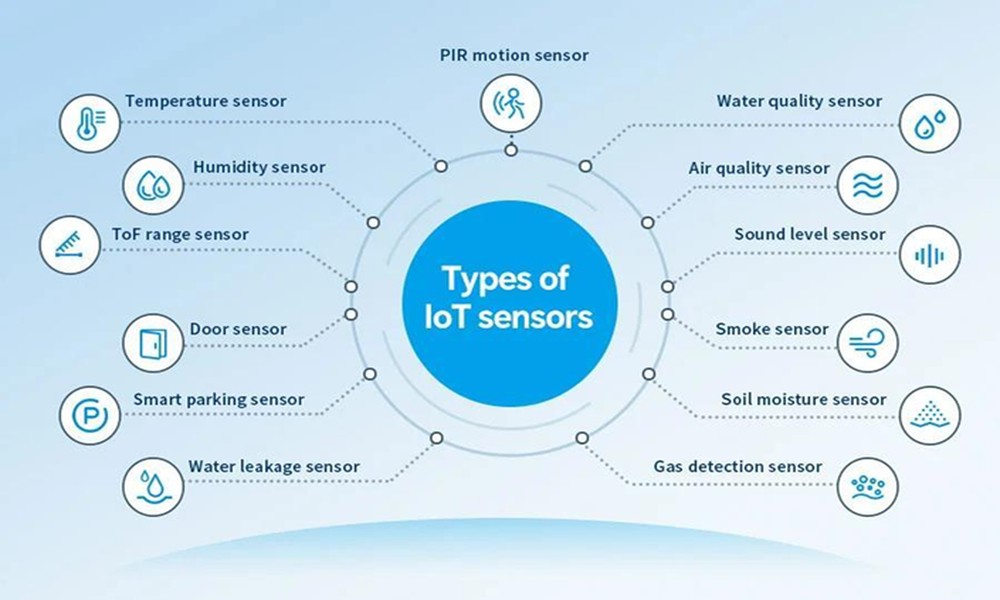
Different applications require different types of sensors. Some of the most widely used IoT sensors include:
Temperature Sensors
Used in HVAC systems, agriculture, and industrial monitoring.
Humidity Sensors
Help maintain optimal environmental conditions in warehouses, greenhouses, and homes.
Motion Sensors
Commonly used in security systems, automatic lighting, and smart devices.
Gas and Air Quality Sensors
Detect pollutants and hazardous gases, improving safety and health monitoring.
Pressure Sensors
Used in automotive systems, industrial equipment, and medical devices.
Each type of sensor plays a unique role in building a comprehensive IoT system.
Categories of Smart Sensor Devices
Smart sensor devices are designed for specific use cases and industries:
Smart Home Devices
Devices such as smart thermostats, lighting systems, and security cameras improve convenience, safety, and energy efficiency.
Industrial Smart Devices
Used in factories for machine monitoring, predictive maintenance, and automation.
Wearable Devices
Fitness trackers and smartwatches monitor health metrics like heart rate and activity levels.
Smart Infrastructure
Used in cities for traffic control, waste management, and environmental monitoring.
Advantages of IoT Sensors and Smart Devices
The adoption of IoT sensors and smart sensor devices brings numerous benefits:
Enhanced Automation
Processes can run automatically with minimal human intervention.
Real-Time Monitoring
Users can track systems and environments instantly.
Improved Resource Management
Energy, water, and materials can be used more efficiently.
Reduced Operational Costs
Automation and predictive maintenance lower expenses.
Better Safety and Security
Sensors can detect threats and trigger immediate alerts.
Practical Applications Across Industries
Agriculture
Farmers use IoT sensors to monitor soil moisture, weather conditions, and crop health. This leads to higher yields and efficient resource usage.
Healthcare
Wearable smart devices track patient health in real time, enabling remote monitoring and early diagnosis.
Manufacturing
Factories use smart sensors to monitor equipment, optimize production, and prevent breakdowns.
Transportation
IoT sensors help track vehicles, manage traffic, and improve logistics operations.
Energy Sector
Smart grids use sensors to balance energy demand and supply efficiently.
Challenges and Limitations
Despite their advantages, IoT sensors and smart devices also face several challenges:
Cybersecurity Risks
Connected devices are vulnerable to hacking if not properly secured.
Data Overload
Large volumes of data can be difficult to manage and analyze.
Connectivity Issues
Reliable internet access is crucial for seamless operation.
Compatibility Problems
Different devices and platforms may not always integrate بسهولة.
Power Constraints
Battery life remains a concern, especially for remote sensors.
Emerging Trends in IoT Sensors
The future of IoT sensors and smart sensor devices is being shaped by several key trends:
Edge Intelligence
More processing is being done directly on devices, reducing latency.
AI Integration
Artificial Intelligence is enabling smarter decision-making and predictive analytics.
5G Connectivity
Faster and more reliable networks are improving IoT performance.
Miniaturization
Sustainable Design
Energy-efficient sensors are being developed to reduce environmental impact.
Conclusion
IoT sensors and smart sensor devices are the driving force behind the connected world. They enable systems to sense, think, and act-transforming how we interact with technology and our environment.
From smart homes and healthcare to industrial automation and smart cities, these technologies are unlocking new levels of efficiency, safety, and innovation. As advancements continue, IoT sensors and smart devices will become even more intelligent, integrated, and essential to modern life.
Understanding their role and potential is key to staying ahead in an increasingly data-driven and connected future.
